
There are spaces that do not merely exist, but define a way of seeing. Castillo de San José marks fifty years since César Manrique rescued it from abandonment to turn it into one of the most ambitious projects of his artistic thinking: a place where contemporary art, architecture, and gastronomy engage in dialogue with the landscape of Lanzarote.
On 20 March 1976, it was not just a rehabilitated building that was inaugurated. An idea was set in motion: to integrate artistic creation into the everyday life of the island. The old Fortaleza del Hambre, built in the 18th century, left behind its defensive past to become the International Museum of Contemporary Art (MIAC), the first of its kind in the Canary Islands.
A museum that opened Lanzarote to the world
From its first months of life, Castillo de San José began to position itself as a major cultural hub. The First International Visual Arts Competition of Lanzarote, held in December 1976, marked a turning point. The presence of works by artists such as Picasso, Miró, Tàpies, Chillida, Millares, and Henry Moore not only enriched the museum's collection but placed the island within the international contemporary art circuit.
That initial momentum was also the seed of later initiatives such as the Lanzarote Art Biennial, consolidating a cultural model that understood the territory as a creative space and not merely a tourist destination.
Today, the MIAC maintains this vocation with a continuous programme of temporary exhibitions and public activities that invite reflection on contemporaneity, while opening space for new generations of artists.
Gastronomy with its own identity
Alongside the museum, the restaurant at Castillo de San José has been another key to its singularity. Also conceived from Manrique's aesthetic vision, the space has evolved over time without losing its essence.
Visitors from all over the world have passed through its tables, as well as prominent figures from politics, culture, and sport. Over the years, the culinary proposal has adapted, combining tradition and creativity: from dishes that are part of its memory — such as cherne or sole with banana sauce — to new interpretations that engage with contemporary cuisine.
The restaurant is not an add-on, but an integral part of the original concept: a complete cultural experience where art is also tasted.
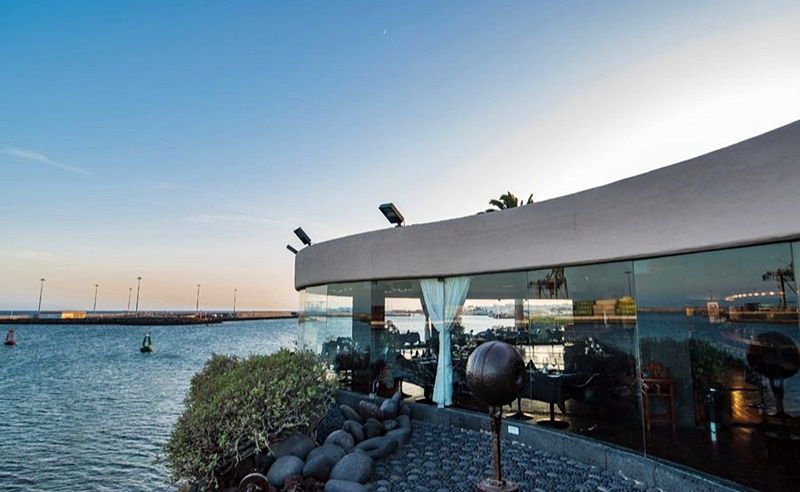
A space that reinvents itself without losing its essence
Fifty years on, Castillo de San José remains a space in transformation. Far from becoming a static piece, it has continually rethought itself to stay connected with the present.
The museum continues to attract both local and visiting audiences, while the restaurant remains a benchmark in an increasingly demanding gastronomic context. That capacity for adaptation is precisely one of the keys to its longevity.
Looking to the past to project the future
The anniversary is not conceived as a closing, but as a starting point. Throughout the year, a special programme will be developed to revisit the legacy of César Manrique from a contemporary perspective, highlighting his ability to imagine what others could not see.
Because Castillo de San José is not just a building or a museum. It is a way of understanding Lanzarote: a place where art, landscape, and everyday life continue to meet half a century later.